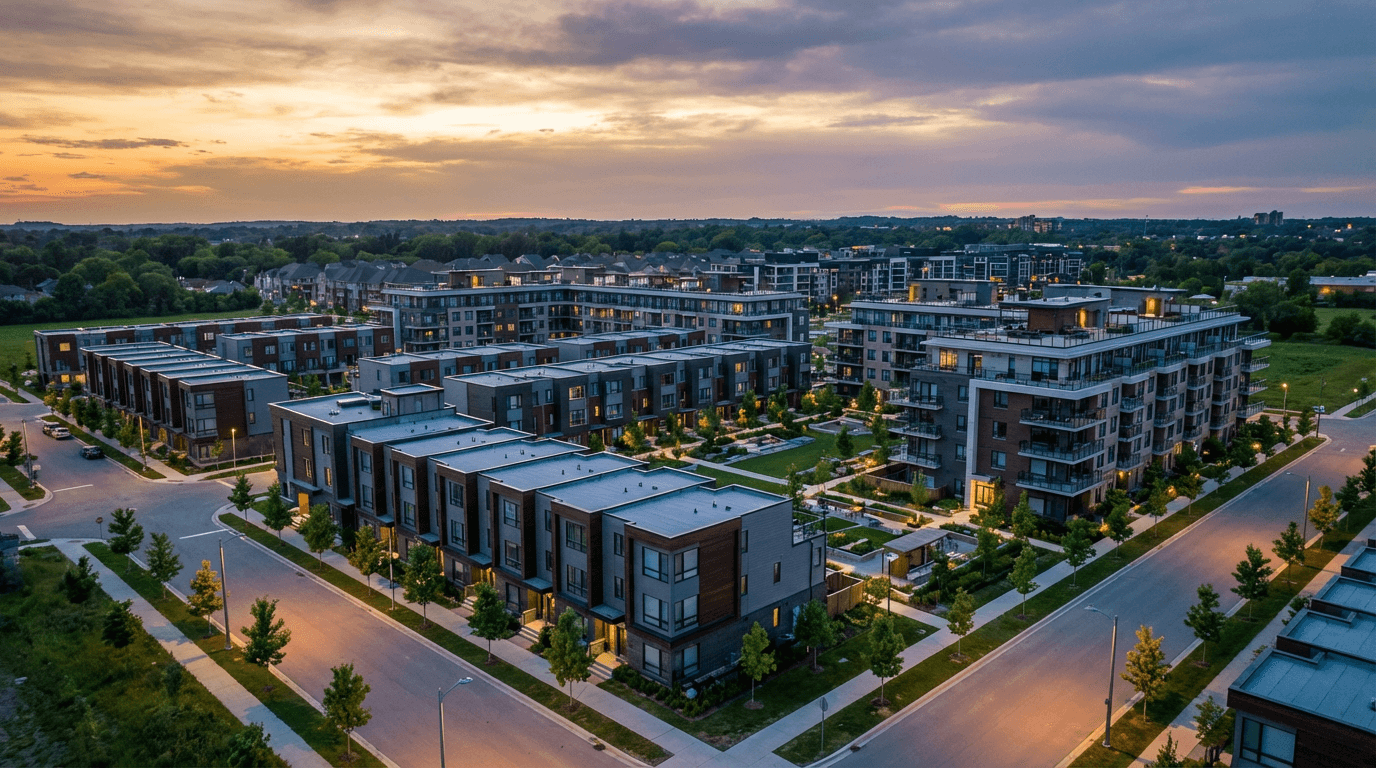
Buying home as investment involves generating passive income through rental yields and building long-term wealth via property appreciation. For first-time buyers, buying a home as an investment property means securing a substantial down payment, typically between 20 and 25 percent, while carefully evaluating capitalization rates to ensure strong rental property cash flow. This strategy requires a thorough analysis of operating expenses, financing costs, and local market conditions to mitigate risks associated with vacancies or maintenance.
For the international investor, the challenge of capital preservation often feels like a moving target in a world of volatile currencies and fluctuating domestic markets. You recognize the stability of the U.S. housing market; however, the logistical barrier of managing a remote rental property can seem insurmountable from thousands of miles away. Bridging this gap requires a move from passive observation to disciplined, data-driven execution. In this guide, KLR INVESTMENTS provides a sophisticated roadmap for securing high-performing assets in the American heartland. We will analyze why the Midwest remains the premier choice for remote wealth generation, explore the essential metrics of cash flow evaluation that go beyond the basic cap rate, and outline a streamlined process for acquisition. You will learn how to navigate the common pitfalls of foreign ownership while building a resilient, dollar-denominated portfolio that secures your financial legacy.
Why Buying a Home as an Investment Property is the First Choice for Wealth Preservation
For many international high-net-worth individuals, buying home as investment represents a strategic pivot from the inherent unpredictability of global equities. While international stock markets often react sharply to geopolitical shifts, the U.S. residential rental market, particularly within the stable corridors of the Midwest, operates on a foundation of consistent demand. This asset class transforms capital into a tangible hedge against inflation, anchored by the strength of the U.S. dollar and a transparent legal framework that protects property rights.
In the context of wealth preservation, the U.S. Midwest offers a unique decoupling from the speculative bubbles often seen in coastal hubs like London, New York, or Hong Kong. At KLR Investments, our investment consulting focuses on a singular, non-negotiable metric: immediate, net cash flow. For a first-time remote investor, banking on future appreciation is a gamble that lacks the safety net required for cross-border transactions. Reliable cash flow provides the liquidity necessary to handle maintenance and debt service without relying on external capital injections. By prioritizing properties that generate yield from day one, investors can build a self-sustaining portfolio. Through our full acquisition management, we emphasize that a property must be an income generator first and an appreciating asset second, ensuring that your capital is protected by the actual utility and rental demand of the local market.
Can Your First Property Be an Investment Property? A Look at Financing
For international investors, the path to property ownership often diverges from the traditional domestic trajectory. A common question is whether a first purchase can be an investment property rather than a primary residence. The answer is a definitive yes. In fact, for those residing outside the U.S., the first acquisition is almost exclusively an investment vehicle. U.S. lenders categorize properties based on intent; a primary residence requires the owner to occupy the home for the majority of the year, whereas an investment property is treated as a business asset designed to generate income.
Financing these assets requires a different capital structure than owner-occupied homes. While domestic investors might secure an investment loan with a 20 to 25 percent down payment, international non-residents should prepare for a 30 percent requirement. This higher threshold accounts for the lack of a domestic credit score and the increased risk profile associated with cross-border lending. When buying home as investment, the lender's primary concern is the property's ability to cover its own debt service, often measured through a Debt Service Coverage Ratio (DSCR) loan.
Navigating these financial nuances is a core component of our investment consulting services. We help clients understand that while interest rates for investment properties are typically higher than primary mortgages, the tax advantages and rental yields often justify the spread. When you choose to invest in Milwaukee real estate, the lower cost of entry compared to coastal cities makes the 30 percent down payment significantly more manageable, allowing for a faster path to portfolio scaling without the need for a massive initial capital outlay.
The Golden Rules of Rental Property Cash Flow Evaluation for Foreign Investors

Once the capital structure is established, the focus must shift to the mechanical evaluation of the asset's performance. For an international investor, these quantitative filters are the primary defense against underperforming assets. When buying home as investment, three standard benchmarks provide an initial litmus test: the 1 percent rule, the 2 percent rule, and the 50 percent rule. The 1 percent rule suggests that a property should generate monthly gross rent equal to at least 1 percent of its purchase price. In the stable Milwaukee market, we frequently identify opportunities that approach the 2 percent rule, offering significantly higher yield potential than coastal alternatives.
To account for long term sustainability, the 50 percent rule provides a conservative estimate that half of a property’s gross income will be consumed by operating expenses, excluding the mortgage. While these rules offer a quick snapshot, a professional investment consulting approach requires a more granular formula to determine true net cash flow:
Net Cash Flow = Gross Monthly Rent – (Vacancy Allowance + Property Taxes + Insurance + Professional Management Fees + Maintenance/CapEx Reserves + Debt Service)
These metrics are particularly critical for remote investors because they eliminate the possibility of "sweat equity." A local investor might mitigate costs by performing their own repairs or managing tenants; however, an international owner must rely entirely on professional services. Every interaction with the property, from a middle-of-the-night plumbing emergency to routine lawn care, is a line item expense.
By building these costs into the initial evaluation through our full acquisition management process, we ensure that the property remains a truly passive vehicle. This rigorous math protects your liquidity, ensuring that the asset generates enough surplus to cover its own management and maintenance without requiring unexpected capital injections from abroad. Calculating these figures with local precision is what separates a high yield investment from a speculative purchase.
Evaluating ROI: Cash-on-Cash Return Beyond the Simple Cap Rate

While cash flow formulas define the property’s operating health, sophisticated investment consulting requires a deeper look at specific return profiles. The Capitalization Rate (Cap Rate) is the industry standard for comparing asset value based on Net Operating Income; however, it remains an incomplete metric for investors using leverage because it ignores financing costs. When buying home as investment, the Cash-on-Cash (CoC) return is the more vital indicator of performance for the remote owner. This metric measures the annual pre-tax cash flow against the actual liquid capital you have deployed, including the down payment and closing costs.
For a first-time international buyer, liquidity is the primary defense against market volatility. Unlike the Internal Rate of Return (IRR), which relies on speculative long term projections and terminal exit values, CoC return provides a clear picture of immediate yield. In coastal markets like New York or Los Angeles, sky-high entry prices often compress CoC returns to negligible levels, forcing investors to bet on appreciation. In contrast, those who invest in Milwaukee real estate benefit from lower entry points that facilitate a robust spread between debt service and rental income. Through our full acquisition management process, we prioritize these higher cash-on-cash returns to ensure the asset generates spendable income from day one.
The Logistics of Remote Acquisition: From Search to Closing

Transitioning from abstract ROI calculations to tangible ownership requires a coordinated logistics chain. For the international buyer, the process begins with reliable boots on the ground to replace physical presence. Remote scouting involves high definition video walkthroughs and neighborhood analysis that goes beyond what public listing sites provide. At KLR Investments, our investment consulting provides the local insight necessary to identify high yield pockets in Milwaukee, ensuring that the property matches the data on paper.
Once a property is identified, the due diligence phase is critical. In the Midwest, where housing stock often dates back to the early 20th century, a standard home inspection is rarely enough. When buying home as investment, you must prioritize specialized evaluations of stone or block foundations and main sewer lines. Older plumbing systems and aging electrical grids are common in these stable rental markets; identifying these specific issues before closing is the difference between a high yield asset and a liability.
The final stage involves navigating U.S. tax and legal requirements. International investors must obtain an Individual Taxpayer Identification Number (ITIN) to comply with IRS regulations and facilitate the opening of U.S. bank accounts. Modern digital closing processes allow for the remote execution of documents, often utilizing mobile notaries or remote online notarization (RON) platforms. KLR Investments provides full acquisition management by coordinating these specialized vendors, ensuring that the transition from international capital to a stabilized asset is seamless. By managing these moving parts, we allow you to invest in Milwaukee real estate without the logistical friction usually associated with cross border transactions.
Why the Midwest is the Premier Market for Remote Investment Property Buyers

While logistics provide the framework, the geographical choice defines the ultimate success of the portfolio. Many international buyers are lured by the high-profile appreciation of Sunbelt markets like Phoenix or Austin, yet these regions often carry speculative risks that can jeopardize a first-time remote venture. In contrast, the Midwest offers a stable, highly profitable environment that prioritizes immediate income over the hope of future price spikes. Our investment consulting highlights Milwaukee as a premier destination because it decouples monthly yield from market volatility. The city’s price-to-rent ratio is significantly more favorable than coastal or high-growth hubs; where a property in a speculative market might struggle to break even after expenses, a Milwaukee asset can generate substantial net cash flow from day one.
The cornerstone of high-yield entry in this market is the classic residential duplex. These properties allow you to invest in Milwaukee real estate with built-in risk mitigation. By securing two units under one roof, you effectively diversify your income stream. If one tenant vacates, the other unit continues to cover a significant portion of the operating costs and debt service. This structural advantage, combined with the region's steady demand from a diverse workforce, makes it the ideal environment for buying home as investment. We focus on these specific local dynamics to ensure that your capital is not just parked, but actively compounding through a proven, income-first model.
Common Pitfalls When Learning How to Buy Investment Property
Navigating the U.S. market requires awareness of structural traps that domestic buyers rarely encounter. Currency exchange volatility can silently diminish net yields; investors should maintain U.S. based accounts to time their repatriations strategically. Furthermore, the Foreign Investment in Real Property Tax Act (FIRPTA) mandates a 15 percent withholding on the gross sales price during an exit, necessitating specialized investment consulting to manage tax exposure.
A frequent error when buying home as investment is hiring discount property managers who prioritize low fees over compliance. In Milwaukee, ignoring specific rental codes, such as lead safety protocols or mandatory municipal occupancy registrations, results in severe fines and legal liability. Our full acquisition management ensures that you invest in Milwaukee real estate while avoiding these costly regulatory and financial oversights.