Milwaukee offers high cash flow potential through affordable entry prices and projected rent increases of up to six percent in 2026. Milwaukee real estate investment for foreigners is bolstered by stable student housing demand and urban growth in neighbourhoods like Bay View; furthermore, its proximity to Chicago provides additional economic stability for long-term holders.
You have capital ready to deploy into the US real estate market, but the coastal cities that once looked promising now come with sky-high entry costs, compressed margins, and unpredictable regulatory environments that make serious returns feel out of reach. That frustration is exactly why international investors are looking inward, toward Midwest markets that quietly deliver what gateway cities only promise. Milwaukee, Wisconsin has emerged as one of the most compelling destinations for foreign capital in 2026, and the reasons go well beyond low prices. In this guide, you will learn what the current market data actually shows, which neighbourhoods are producing the strongest returns, how foreign nationals can close deals remotely, and what tax advantages are available to international buyers investing in Milwaukee today.
TL;DR: Why Foreign Investors Are Choosing Milwaukee in 2026
Milwaukee real estate investment for foreigners checks every practical box heading into 2026. Here is why international capital is flowing into this market:
Entry-level pricing around $172,000 puts cash-flow-positive acquisitions within reach without the leverage risk required in coastal markets.
The 1% rule is frequently achievable, meaning monthly gross rent can equal or exceed 1% of the purchase price, a threshold that is virtually impossible in New York, Los Angeles, or Chicago.
Foreign nationals face no legal restrictions on owning US real estate. Any individual or entity can purchase, hold, and rent property in the US regardless of citizenship.
Opportunity Zone incentives remain active in 2026, with pending legislative changes creating real urgency for investors deploying capital now.
Midwest fundamentals provide stability, anchored by major employers, a renter-heavy population, and insulation from the boom-bust volatility that plagues speculative markets.
Milwaukee by the Numbers: What the 2026 Market Data Actually Shows

Those bullet points above are not projections; they are grounded in current market data that holds up under scrutiny.
Milwaukee's median home price sits at approximately $172,000, a figure that demands context. The national median hovers above $400,000. In Los Angeles, that same capital buys a fraction of a property. In New York, it barely registers as a down payment. For foreign investors deploying USD-denominated capital, the arithmetic in Milwaukee works in ways coastal cities simply cannot match.
On the income side, average rents are tracking around $1,300 per month as of 2026 (Zillow), with efficiency units telling an especially sharp story: rents in that segment climbed 42% over five years, from $663 to $939. That is not a speculative number; it reflects sustained demand compression in a city where renters consistently outnumber owners.
So is Milwaukee a good rental market? The honest answer is yes, with one nuance worth addressing directly. Vacancy rates rose from 4.9% in 2024 to 10.8% in 2025. That shift reflects more landlord competition, not a collapse in renter demand. Milwaukee remains a structurally renter-heavy city. What the vacancy increase signals for sophisticated investors is a bifurcated market: properties that are well-maintained, well-priced, and professionally managed continue to lease; properties that are not, sit. That is a differentiation, not a deterrent.
Projected rent growth of 3-6% for 2026 sits comfortably above inflation in most scenarios, supporting stable cash-on-cash returns.
The defining metric for Milwaukee real estate investment for foreigners remains the 1% rule. A $172,000 acquisition generating $1,300 per month clears it. In Chicago, New York, or Los Angeles, achieving that ratio would require either extreme leverage or significant property deterioration. Neither is a foundation for reliable returns.
Market | Approx. Median Price | Avg. Monthly Rent | 1% Rule Achievable? |
|---|---|---|---|
Milwaukee | $172,000 | $1,300 | Frequently yes |
Chicago | $330,000+ | $1,800 | Rarely |
New York | $750,000+ | $3,200 | No |
Los Angeles | $800,000+ | $2,800 | No |
The numbers make the case before any qualitative argument is needed.
Why Stable Beats Flashy: The Midwest Advantage for International Capital
The data comparison above raises a question that numbers alone cannot answer: why does stability matter more than upside potential for cross-border investors?
For Israeli investors and other international buyers deploying capital across currencies and time zones, the answer is structural. Speculative appreciation plays require proximity, local market timing, and a tolerance for liquidity risk that remote investors rarely have. What cross-border capital actually needs is predictable, USD-denominated cash flow that performs across market cycles without requiring active intervention from 6,000 miles away.
Milwaukee delivers that in ways coastal gateway cities cannot replicate.
The city's tenant base is not dependent on a single industry or economic cycle. Advocate Aurora Health, Northwestern Mutual, Marquette University, and the University of Wisconsin-Milwaukee collectively employ and enrol tens of thousands of people, creating layered, recession-resistant demand across healthcare workers, finance professionals, students, and faculty. That diversity insulates rental demand from the single-sector collapses that have periodically destabilised markets in cities built around one dominant industry.
The price-to-rent ratio reinforces this point. In coastal markets, investors pay a substantial premium for appreciation potential that may or may not materialize. In Milwaukee, the ratio compresses in the investor's favour, meaning income arrives now rather than hypothetically later. For an international investor managing currency exposure, that distinction is not philosophical; it is practical.
Milwaukee's position roughly 90 miles north of Chicago adds another layer of stability that competitors rarely discuss. Chicago commuter demand, combined with Milwaukee's own employment base, broadens the renter pool in ways that pure secondary markets cannot match.
Is rental property a good investment in 2026? Nationally, the answer depends heavily on where. In Milwaukee, the fundamentals answer it directly: anchored employers, a structurally renter-heavy population, and a price point that makes cash flow achievable without speculation. KLR INVESTMENTS investment consulting and full acquisition management is built around exactly this calculus.
Neighbourhoods That Deliver Returns: Where Foreign Investors Are Buying
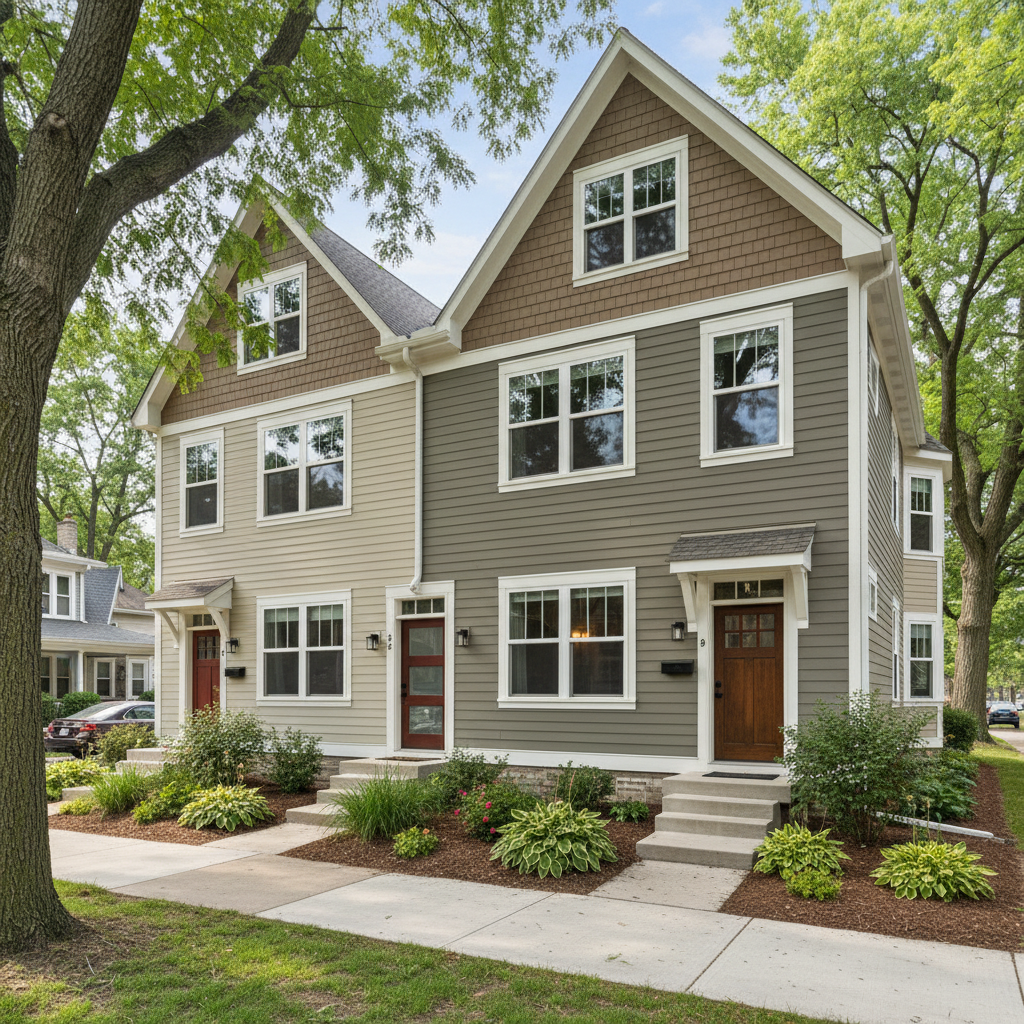
Knowing that Milwaukee delivers returns is one thing; knowing where to position capital within the city is what separates a functional investment from an optimized one. Each neighbourhood carries a different risk-return profile, and for international buyers evaluating from a distance, that distinction matters.
Our on-the-ground knowledge of each sub market allows international buyers to align neighbourhood selection with specific yield targets and risk tolerance rather than guessing from a map.
FIRPTA and the ITIN requirement: Foreign buyers are subject to FIRPTA withholding on the sale of US real property, typically 15% of the gross sale price withheld at closing. Separately, an Individual Taxpayer Identification Number is required for any foreign national receiving US rental income or proceeds from a sale. Neither of these is an obstacle, but both require advance coordination.
Foriegn and US tax law interact in ways that generic real estate counsel does not address. We, via our investment consulting and full acquisition management include tax-focused financial coordination specifically designed for cross-border investors navigating both systems. The structure you establish before acquisition matters as much as the property you select.
How to Buy Milwaukee Investment Property Without Visiting in Person

Establishing the right tax structure before acquisition is one layer of the process. Actually completing an acquisition from abroad is another, and for Milwaukee real estate investment for foreigners, the logistics are more manageable than most international investors initially assume.
We coordinates the full acquisition process locally so that physical presence is never a requirement. Virtual property tours are organized with local walk-through captured in enough detail to evaluate condition, layout, and deferred maintenance items that photographs miss. Licensed inspectors are engaged and managed on the ground, with reports delivered in formats that translate clearly across time zones.
Remote closings in Wisconsin rely on a power of attorney structure, which allows a designated local representative to execute closing documents on behalf of the buyer. This is a standard legal instrument under Wisconsin law, not a workaround, and it has been used to complete transactions cleanly without the buyer ever boarding a flight.
Due diligence without a site visit is built on data: neighbourhood crime rate, verified rent comparable, vacancy trends, and local market pricing that reflects actual transactions rather than listing optimism. That is the foundation we bring to every evaluation.
This is not theoretical. Israeli investors have completed Milwaukee acquisitions entirely remotely through this process. If you want to understand what that looks like for your specific situation, reach out to schedule a consultation.
Common Questions from Israeli and International Investors About Milwaukee

The acquisition process and remote logistics answer the how. These questions address the what and why that come up consistently from Israeli and international investors evaluating Milwaukee real estate investment for foreigners for the first time.
Can foreigners get a mortgage for US investment property? Yes. DSCR loans (Debt Service Coverage Ratio) and foreign national loan programs are available to non-US residents and do not require a Social Security number or US credit history. Down payments typically run 25-30% of the purchase price. Loan qualification is based primarily on the property's rental income relative to its debt obligation, which suits Milwaukee acquisitions well given the achievable rent-to-price ratios here.
Do foreign investors pay more tax on US rental income? Foreign investors are subject to FIRPTA withholding at disposition, typically 15% of the gross sale price, and rental income is subject to US federal taxation. Structuring ownership through a properly formed US LLC can optimize how that income is reported and taxed. The interaction between Israeli and US tax law requires specific expertise; generic real estate counsel rarely covers both systems. Our investment consulting and full acquisition management includes tax-focused financial coordination built for cross-border investors.
Are foreign investors currently buying US real estate? Yes. NAR data consistently shows international buyers remain active in the US market. Midwest markets are drawing increasing attention specifically because affordable entry points allow foreign capital to achieve cash flow targets that coastal cities no longer support at current price levels.
Is Milwaukee safe for long-term investment? Milwaukee's employment base spans healthcare, finance, education, and manufacturing, with no single-industry dependency that would expose landlords to sector-specific downturns. The city has a long established rental history, meaning tenant infrastructure, property management networks, and local landlord frameworks are mature. Projected rent growth of 3-6% for 2026 supports continued return stability rather than speculative positioning. If you want to evaluate how Milwaukee fits your specific capital goals, reach out to schedule a consultation.
Milwaukee represents a unique intersection of affordability and growth potential for international investors as we look toward 2026. While the opportunities are clear, navigating a foreign market requires a deep understanding of local trends and regulatory frameworks. If you would like expert help managing your portfolio or identifying the right properties, we invite you to explore our comprehensive Services. Our team is here to ensure your investment journey is both seamless and successful.