
The most common foreign investors buying US rental property mistakes involve underestimating financing challenges such as high interest rates and failing to budget for the true cost of remote management. Investors often see their returns erased by unexpected taxes or maintenance expenses because they did not vet local partners or establish a proper legal entity. Avoiding these errors requires a realistic analysis of net cash flow after all fees and building a reliable local team.
For many international investors, the promise of stable US rental yields often dissolves into a series of expensive logistical hurdles and unforeseen tax liabilities. It is deeply frustrating to watch your potential profits vanish because of regulatory oversights or a lack of boots on the ground. These setbacks usually stem from applying foreign market logic to the specific, nuanced landscape of American real estate. At KLR Investments LLC, we have seen how a lack of localized expertise can turn a high performing asset into a significant financial burden overnight. This article examines the seven most critical errors foreign nationals make; ranging from the FIRPTA tax trap to the risks of misaligned financing. You will learn how to avoid these pitfalls and build a robust framework that protects your capital while ensuring sustainable growth in the US rental market.
The High Cost of Overseas Assumptions in US Real Estate
The internet is full of "failed investor" stories, often starting with a high-earner attempting to diversify into the American Midwest. These narratives usually involve someone who ran the numbers hundreds of times, only to find their expected cash flow evaporated by 200 dollar service calls and 10,000 dollar turnovers. Most foreign investors buying US rental property mistakes do not stem from selecting a "bad house." Instead, they arise from a flawed process and a profound lack of local context.
For many Israeli investors, the primary hurdle is the subconscious application of home-country logic to a foreign landscape. Real estate in Israel operates on a vastly different rhythm than the US, particularly regarding tax structures, specialized financing requirements, and regional tenant laws. Relying on a simple "buy low, rent high" spreadsheet ignores the operational friction of managing an asset from 6,000 miles away.
Success requires moving beyond the initial purchase price to understand the nuances of full acquisition management. Without data-driven investment consulting that accounts for localized Midwest realities, an investor is merely gambling on a set of assumptions. This article moves past surface-level advice to address the specific, operational pitfalls that separate a reliable income stream from a costly, long-distance hobby.
Mistake 1: Choosing a Team Without Checks and Balances

One of the most frequent foreign investors buying US rental property mistakes is hiring a "one-stop shop" where the Realtor and Property Manager are business partners or the same individual. While this appears convenient for a remote buyer, it creates a fundamental conflict of interest. A realtor is incentivized to close the sale and move to the next transaction; a property manager, however, must live with the physical reality of the asset. When these roles are merged, the person selling the property may intentionally overlook deferred maintenance or structural issues to ensure the commission is paid, knowing they can later bill the investor for "unexpected" repairs.
The risks of this lack of oversight are illustrated by a common narrative among Midwest investors who find their "spreadsheet ROI" decimated by reality. In one notable case, an out-of-state investor purchased two duplexes through a partnered team only to face $10,000 turnover costs and constant $300 service calls immediately after closing. Because the team was "in cahoots," there were no checks and balances to verify if the initial rehab was actually completed or if the property was truly "rent-ready."
To avoid this, investors should engage data-driven investment consulting through an independent firm like us at KLR Investments. We provide the objective oversight necessary to audit property conditions and management performance, ensuring your interests are protected by a partner whose success is tied to your long-term yield rather than a single transaction fee.
Mistake 2: Ignoring the FIRPTA Tax Trap and Entity Structure

Establishing a sound legal and fiscal foundation is as critical as selecting the right neighbourhood. Many foreign investors buying US rental property mistakes center on a failure to anticipate the Foreign Investment in Real Property Tax Act, known as FIRPTA. This regulation requires a buyer to withhold 15% of the gross sales price when purchasing from a foreign person. For an investor selling a property later, this means the IRS may hold a significant portion of the total sale proceeds, not just the profit, until tax obligations are verified. Without proper planning, this creates a massive liquidity squeeze at the moment of exit.
The structure through which you hold title also dictates your long-term success. Purchasing a property in your personal name exposes you to unlimited personal liability and complex estate tax issues. Utilizing a US-based LLC provides a necessary shield for your personal assets and allows for more streamlined tax-focused financial coordination. For foreign investors, it is vital to leverage the existing US-other countries tax treaty, which offers specific protections against double taxation and dictates how income is recognized by the other country Tax Authority.
Navigating these complexities requires a professional bridge. Your Israeli accountant understands your local obligations, but they rarely have the granular expertise required for US federal and state filings in Wisconsin. KLR Investments LLC facilitates data-driven investment consulting that connects you with US-based tax strategists. This coordination ensures that your entity structure is optimized for both US compliance and foreign reporting, preventing the tax trap from eroding your hard-earned yields.
Mistake 3: Underestimating Maintenance and Turnover in Older Midwest Markets
Moving from legal structures to the physical asset reveals a frequent category of foreign investors buying US rental property mistakes. While Milwaukee duplexes offer attractive yields on paper, spreadsheet ROI often ignores the operational friction of older Midwest housing stock. Success in these markets requires distinguishing between a house that looks good and one that is functionally durable.
A common shock for remote owners is the 10,000 dollar turnover cost. In Milwaukee, if a property is not properly rent-ready during the initial rehab, a single vacancy can necessitate painting, floor refinishing, and mechanical updates that erase years of profit. Compounding this is the 200 dollar service call reality. Small repairs, such as a clogged drain or a broken door handle, incur labor costs that add up quickly. Without a rigorous vetting process during the full acquisition management phase, these frequent, minor expenses can deplete an entire year’s cash flow.
Avoiding this depletion requires data-driven investment consulting to establish maintenance reserves based on local asset age rather than arbitrary percentages. By accurately forecasting these costs, you ensure that your broader strategy, supported by tax-focused financial coordination, is built on predictable net returns rather than optimistic gross projections.
Mistake 4: Misaligned Financing and Documentation for Foreign Nationals
Financing hurdles are a common source of foreign investors buying US rental property mistakes, particularly for those accustomed to Israeli banking protocols. While a lack of U.S. credit history is not an absolute barrier, specialized lenders require meticulous documentation that foreign banks often fail to provide in a standard American format. Israeli investors frequently encounter friction when proving liquid reserves; a simple bank statement printout is rarely sufficient for rigorous U.S. underwriting.
Success requires pre-emptively securing professional translations and specific letters of reference that satisfy specialized lender requirements. It is essential to enter the market with realistic capital expectations, as these loan programs typically demand a 30% to 40% down payment to offset the perceived risk of a non-resident borrower. This capital intensity must be integrated into your tax-focused financial coordination to ensure your overall portfolio remains liquid. Through data-driven investment consulting, we help bridge the gap between Israeli financial records and U.S. lending standards, preventing the documentation delays that often derail full acquisition management in a competitive market like Milwaukee.
Mistake 5: Chasing Appreciation in Volatile Coastal Markets
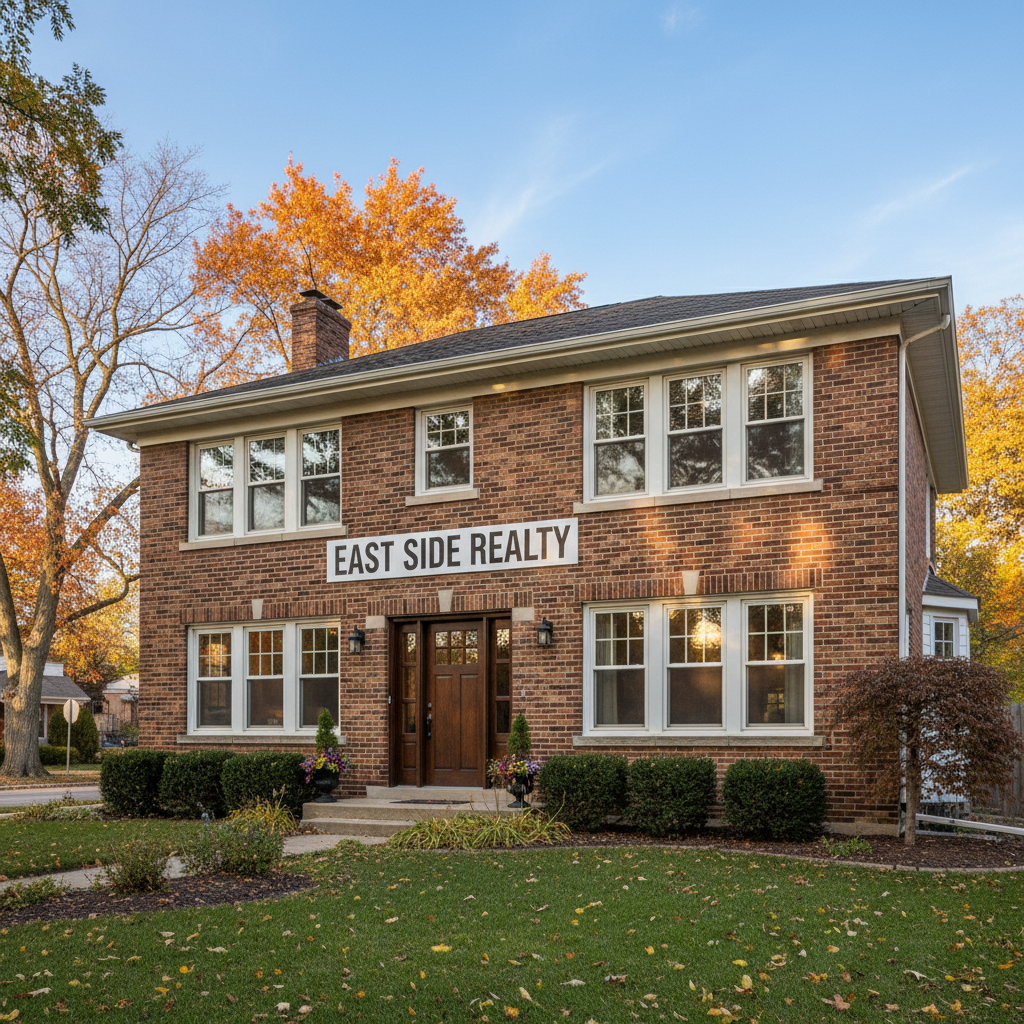
Many foreign investors gravitate toward high-profile coastal cities like New York, Los Angeles, or Miami, operating under the assumption that these markets offer guaranteed appreciation. This reliance on brand-name recognition is one of the most frequent foreign investors buying US rental property mistakes. One specific case study involves an investor who purchased in Oahu, Hawaii, under the belief that "Hawaii real estate always goes up." They quickly discovered that the high entry price resulted in negative cash flow, while maintenance costs doubled their original budget, turning a perceived trophy asset into a financial drain.
In these volatile coastal markets, the cost of entry is often so high that investors are forced to speculate on future value rather than present earnings. By contrast, the Milwaukee market provides a stable, high-yield environment where the rent-to-value ratio is significantly more favorable for cash flow. Through data-driven investment consulting, we guide investors toward Midwest assets that prioritize immediate, predictable returns. Choosing the Midwest ensures your capital is deployed into properties with lower entry points and higher yields, providing a resilient foundation for full acquisition management and long-term portfolio growth.
Mistake 6: Lack of Professional Oversight for Remote Management
Distance creates a vacuum where "invisible" decay thrives. When an investor is 6,000 miles away, they rely entirely on the reports provided by a property management company. However, a standard property manager often operates on a volume basis; they focus on rent collection and reactive repairs rather than proactive asset preservation. This systemic lack of eyes on the ground is a common source of foreign investors buying US rental property mistakes.
Safeguarding your capital requires a "portfolio manager" or an independent consultant who audits the property manager. Without this secondary layer, management negligence can quietly deplete the asset's value through deferred maintenance that never appears in a monthly portal. Practical oversight includes mandatory quarterly assessments where a local representative physically visits the site to verify the property's condition. Through data-driven investment consulting, we provide this critical oversight, ensuring your full acquisition management and tax-focused financial coordination are supported by real-world physical verification. This prevents the slow erosion of property value and keeps the management team accountable to your long-term yield.
Mistake 7: Timing the Currency Exchange and Market Entry Incorrectly
The final layer of complexity for Israeli investors involves the volatile relationship between the Israeli Shekel and the US Dollar. A primary source of foreign investors buying US rental property mistakes is treating currency conversion as an afterthought rather than a strategic component of the acquisition. Fluctuations in the exchange rate can erode five to ten percent of your initial equity before you even take title. Furthermore, failing to account for bank spreads and wire fees can significantly impact your total cash out of pocket, often resulting in a funding shortfall at the closing table.
Efficiency in the Milwaukee market requires immediate liquidity. We emphasize the necessity of establishing a US-based business bank account early in our engagement, specifically during Step 3 of the KLR process. This proactive step prevents the documentation bottlenecks and pre-approval delays that frequently cause Israeli buyers to lose out on high-yield deals to local competitors. When a property meets our criteria for data-driven investment consulting, having your capital already positioned in USD allows for an immediate, credible offer. This readiness is a cornerstone of full acquisition management, ensuring that your tax-focused financial coordination is not undermined by administrative friction or unfavourable shifts in the local currencies-to-USD valuation. Managing your entry timing is not just about the real estate market; it is about protecting your purchasing power from the moment capital leaves Israel.
Successfully navigating the US rental market as a foreign investor requires more than just capital; it demands a strategic approach to tax, legal, and operational challenges. By avoiding these common mistakes, you protect your portfolio and ensure long term growth. If you find the complexities of cross border investing overwhelming or simply want expert help to streamline your journey, we are here to support you. You can learn more about our approach and mission to see how our expertise aligns with your investment goals.