The milwaukee real estate market offers international investors a stable environment in 2026 with average cap rates reaching 7.0 percent and strong demand for Class B and C multifamily units. Median home prices around $218,000 facilitate accessible entry points; meanwhile, consistent property value appreciation supports long term returns for both residential and commercial investments.
For many international investors, the primary challenge remains finding sustainable yields in a global market defined by compressed cap rates and volatile valuations. Established coastal hubs often fail to provide the necessary cash-on-cash returns to justify high entry costs, frequently leaving capital stagnant. Milwaukee presents a sophisticated alternative, offering a unique combination of economic resilience and robust rental demand that is increasingly rare in 2026. This stability is not accidental; it is rooted in a diverse industrial base and a tightening housing supply that protects against broader market corrections. In this guide, we will analyze current cap rate trends for residential assets and identify the specific neighborhoods where appreciation potential meets high-yield performance. You will also learn how to navigate the logistical hurdles of remote ownership and cross-border tax coordination to ensure your Midwest portfolio remains both profitable and compliant.
The 2026 Milwaukee Real Estate Market Outlook: Stability in a Shifting Economy
As we enter 2026, the milwaukee real estate market is transitioning into a phase defined by structural stability. For the international investor, this rebalancing represents a maturation of the market rather than a slowdown. Current forecasts indicate mortgage rates are stabilizing around 6 percent, which provides a predictable baseline for debt service coverage ratios. While national headlines often focus on rapid appreciation or correction, Milwaukee is projected to see a modest 1 to 2 percent appreciation. This environment favors those prioritizing cash flow over volatile speculation.
A key metric for Milwaukee real estate investors is the city's exceptionally high occupancy rate, which currently sits at 95.8 percent. This significantly outperforms many coastal hubs and national averages, signaling a chronic undersupply of quality rental housing. This supply-demand imbalance ensures that rental income remains resilient even as the broader economy shifts. By moving away from the boom and bust cycles typical of Tier 1 cities, the Midwest offers a defensive posture for capital preservation.
Successfully investing in the Milwaukee real estate market in 2026 requires moving beyond surface-level listings. Through data-driven investment consulting, we focus on the underlying fundamentals: employment hubs, tenant retention rates, and local tax efficiency. The market’s current state allows for more deliberate acquisition strategies, where investors can negotiate terms that prioritize long-term net operating income. This period of rebalancing marks an ideal entry point for those seeking reliable, high-yield residential assets in a stable US jurisdiction.
Decoding Milwaukee Cap Rates: What to Expect from Residential Assets

Understanding yield in the milwaukee real estate market requires a granular look at how different asset classes perform under current economic conditions. As of 2026, the citywide average cap rate for residential and multifamily assets remains a robust 7.0 percent. However, this figure is a weighted average that fluctuates based on the neighborhood profile and the building's vintage.
Investors prioritizing stability over maximum yield often target Class A assets in established areas. Properties in Shorewood or Wauwatosa typically stabilize at a 6.8 percent cap rate. These suburbs offer lower turnover and professional tenant profiles, which reduces long term maintenance costs. Conversely, Class B and C properties in the urban core can push yields higher, often exceeding 7.5 percent. While these assets provide stronger monthly cash flow, they require more intensive management and a deeper understanding of local tenant dynamics to maintain profitability.
Asset Class | Typical Location | Average Cap Rate | Management Intensity |
|---|---|---|---|
Class A | ShorewoodWauwatosaBay View | 4-5% | Low |
Class B | Walker's Point, West Allis | 6 -7% | Moderate |
Class C | Midtown, Avenues West, North side (several pockets) | 7.5%+ | Moderate+ |
A common benchmark for Milwaukee real estate investors has historically been the "2 percent rule," where monthly rent equals two percent of the purchase price. In the current landscape, characterized by a median home price of approximately $218,000 and modernized building codes, this rule has become increasingly rare. Chasing these legacy metrics often leads to yield traps where high paper returns are eroded by deferred maintenance or high vacancy rates.
Successfully investing in the Milwaukee real estate market now demands data-driven investment consulting. Instead of relying on outdated rules of thumb, our approach focuses on Net Operating Income optimization and identifying properties with sustainable value add potential. Moving beyond the 2 percent rule allows for a more realistic, sophisticated approach to portfolio growth in a mature market.
Top Neighborhoods for International Capital: Yield vs. Appreciation
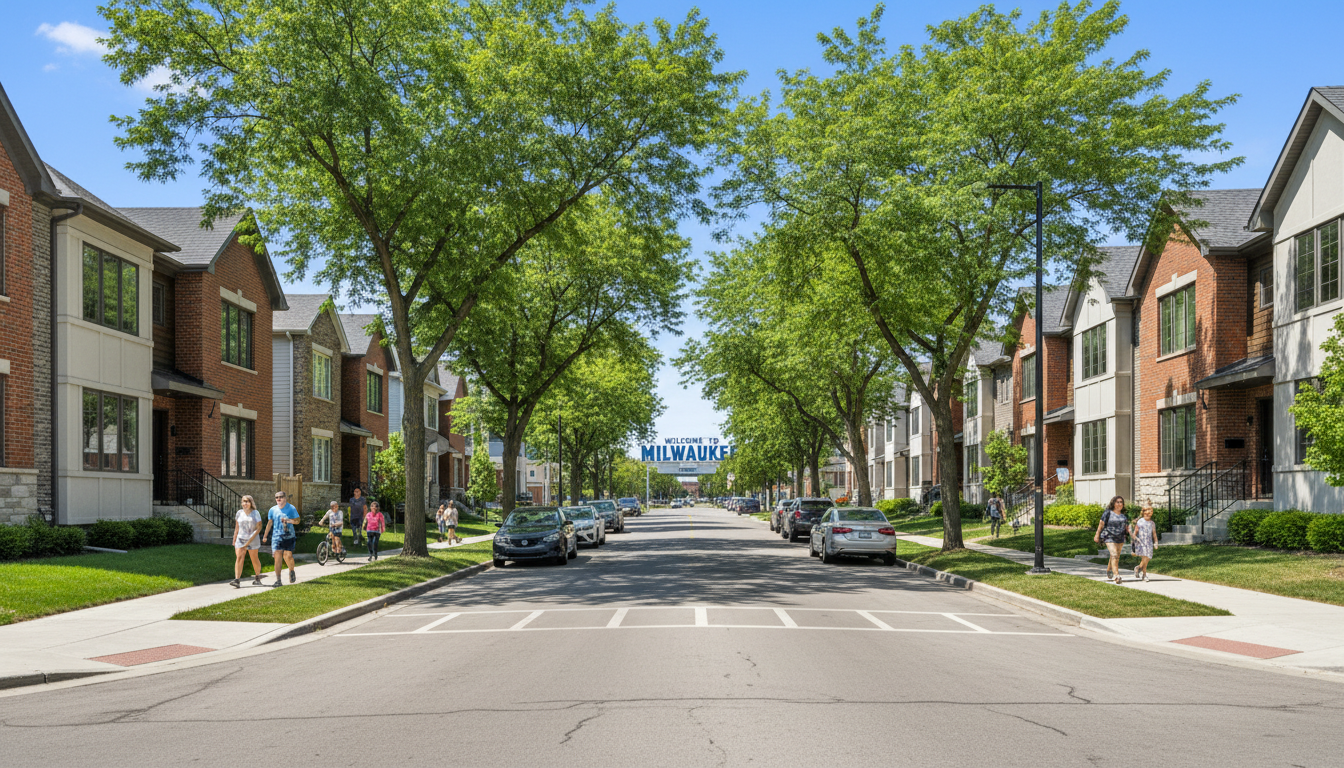
Sophisticated capital allocation in the milwaukee real estate market requires a clear distinction between neighborhoods that drive equity growth and those that prioritize immediate cash flow. For international Milwaukee real estate investors, the choice often comes down to the trade-off between the stability of affluent suburbs and the higher yields found in revitalizing urban corridors.
Investors seeking a balanced profile frequently target Bay View and Walker’s Point. Bay View remains a premier choice due to its lakefront proximity and a consistent professional tenant base, which typically results in lower vacancy periods and higher-quality maintenance standards. Walker’s Point, conversely, is the epicenter of Milwaukee’s urban revitalization; its mix of industrial conversions and new residential builds attracts a workforce tied to the city’s growing tech and service hubs. These areas represent a middle ground, offering moderate yields with a stronger likelihood of 2026’s projected appreciation.
Neighborhood | Primary Driver | Tenant Profile | Typical Strategy |
|---|---|---|---|
Wauwatosa / Shorewood / Bay view | Appreciation | Families / High-Income Professionals | Long-term Capital Preservation |
West Allis/ Walker’s Point | Balanced | Young Professionals | Core-Plus Growth |
Riverwest | Yield | Artists / Students / Young Workers | Value-Add Residential |
Midtown / North side | High Yield | Section 8 / Lower-Income | Income Maximization |
For those focused strictly on capital preservation, Wauwatosa and Shorewood provide the highest stability. These markets are anchored by top-tier school districts and established infrastructure. While cap rates here are the most compressed in the region, the risk of significant value loss is minimal, making them suitable for conservative portfolios. In contrast, Riverwest offers a lower entry point with a younger, artistic demographic. It is a high-demand rental pocket that requires a nuanced understanding of local culture to maintain high occupancy.
When the primary objective is maximum yield, Midtown presents a compelling opportunity through Section 8 housing demand. Investing in the Milwaukee real estate market via government-subsidized programs provides a unique hedge against economic volatility, as rental payments are guaranteed. However, managing these assets remotely requires a specialized approach. Through data-driven investment consulting, we emphasize rigorous initial tenant screening and proactive maintenance schedules. This prevents the high turnover costs and property degradation that can otherwise erode the high gross yields these neighborhoods offer. Successful remote ownership in Midtown is not about finding the cheapest property, but about securing assets that meet high compliance standards to ensure consistent government disbursements.
Why International Investors are Moving Capital to the Midwest
The shift of international capital toward the milwaukee real estate market is driven by a fundamental search for yield that has become nearly impossible in coastal Tier 1 cities. In markets like New York, Los Angeles, or Miami, investors face prohibitive entry prices and compressed cap rates that often fall below 4 percent. This makes it difficult to achieve positive cash flow after accounting for 6 percent mortgage rates. By contrast, the Midwest Advantage offers a median home price of approximately $218,000, allowing Milwaukee real estate investors to build a diversified portfolio with the same capital required for a single asset on the coast.
Market Type | Entry Price (Approx.) | Typical Cap Rate | Primary Investment Goal |
|---|---|---|---|
Tier 1 Coastal | $800,000+ | 3.5% - 4.5% | Speculative Appreciation |
Milwaukee (Midwest / North Side) | $218,000 | 7.0% | Immediate Cash Flow |
Beyond the numbers, Wisconsin’s landlord-friendly legal framework and steady employment hubs in healthcare and advanced manufacturing provide a secure environment for foreign capital. KLR Investments leverages eight years of specialized expertise in investing in the Milwaukee real estate market to bridge the gap between global investors and local opportunities. Through data-driven investment consulting, we help clients navigate this lower-cost entry point while ensuring that the Midwest Advantage translates into tangible; long-term portfolio growth. This strategic allocation of capital favors the stability of the American heartland over the volatility of speculative coastal hubs.
Navigating the Challenges of Remote Ownership and Tax Coordination

Distance remains the primary friction point for global capital. While the milwaukee real estate market offers compelling yields, the operational reality of managing assets from a different time zone involves significant regulatory and logistical hurdles. Successful investing in the Milwaukee real estate market requires more than just capital; it demands local boots on the ground to handle the nuances of acquisition management and ongoing municipal compliance. For an international owner, a property is not just a building; it is a business entity that must adhere to specific Wisconsin landlord laws and city building codes.
Financial logistics represent the second major challenge for cross-border capital. Effective data-driven investment consulting must integrate tax-focused financial coordination to protect net returns. This includes navigating complex federal requirements such as the Foreign Investment in Real Property Tax Act (FIRPTA) and specific withholding protocols. Without proactive portfolio oversight, these tax obligations can lead to unexpected cash flow disruptions or legal complications at the time of divestment. Proper coordination ensures that the technicalities of being a foreign landlord do not erode the fundamental yield of the asset.
KLR Investments bridges this gap by providing a structured framework for remote ownership. We act as the local representative for Milwaukee real estate investors, ensuring that every asset is monitored for performance and every financial transaction is optimized for tax efficiency. This level of oversight transforms a distant, high-yield opportunity into a manageable, professional investment vehicle, allowing investors to leverage the stable Midwest market without the burden of day-to-day administrative complexity.
Is Milwaukee a Good Rental Market for 2026 and Beyond?
The milwaukee real estate market enters 2026 as a premier destination for yield focused capital because it solves the fundamental problem of modern real estate: affordability for locals versus cash flow for owners. With a median home price of $218,000, entry costs remain accessible, while the 95.8 percent occupancy rate ensures consistent revenue. For Milwaukee real estate investors, the most defensive play is attainable Class B housing. As local homeownership costs remain elevated due to 6 percent mortgage rates, a significant portion of the population is priced out of buying, which systematically expands the tenant pool.
This structural shift provides a safety net for residential assets. Unlike speculative markets, Milwaukee’s demand is grounded in a stable workforce rather than transient population spikes. Through data-driven investment consulting, we have identified that sustained rental demand for two and three bedroom units continues to outpace new supply. Investing in the Milwaukee real estate market for 2026 and beyond is a strategy built on predictable demographics and high yield fundamentals; it offers a durable alternative to volatile equity markets or compressed coastal real estate.
The 2026 Milwaukee real estate market presents a compelling opportunity for international investors seeking stable yields and competitive cap rates. While the numbers remain promising, successfully navigating local regulations and neighborhood nuances requires a clear strategy. If you would like professional guidance to help align these opportunities with your specific financial goals, our team is here to support you. We invite you to explore our Investment Consulting services to ensure your portfolio is positioned for long term success in this evolving landscape.