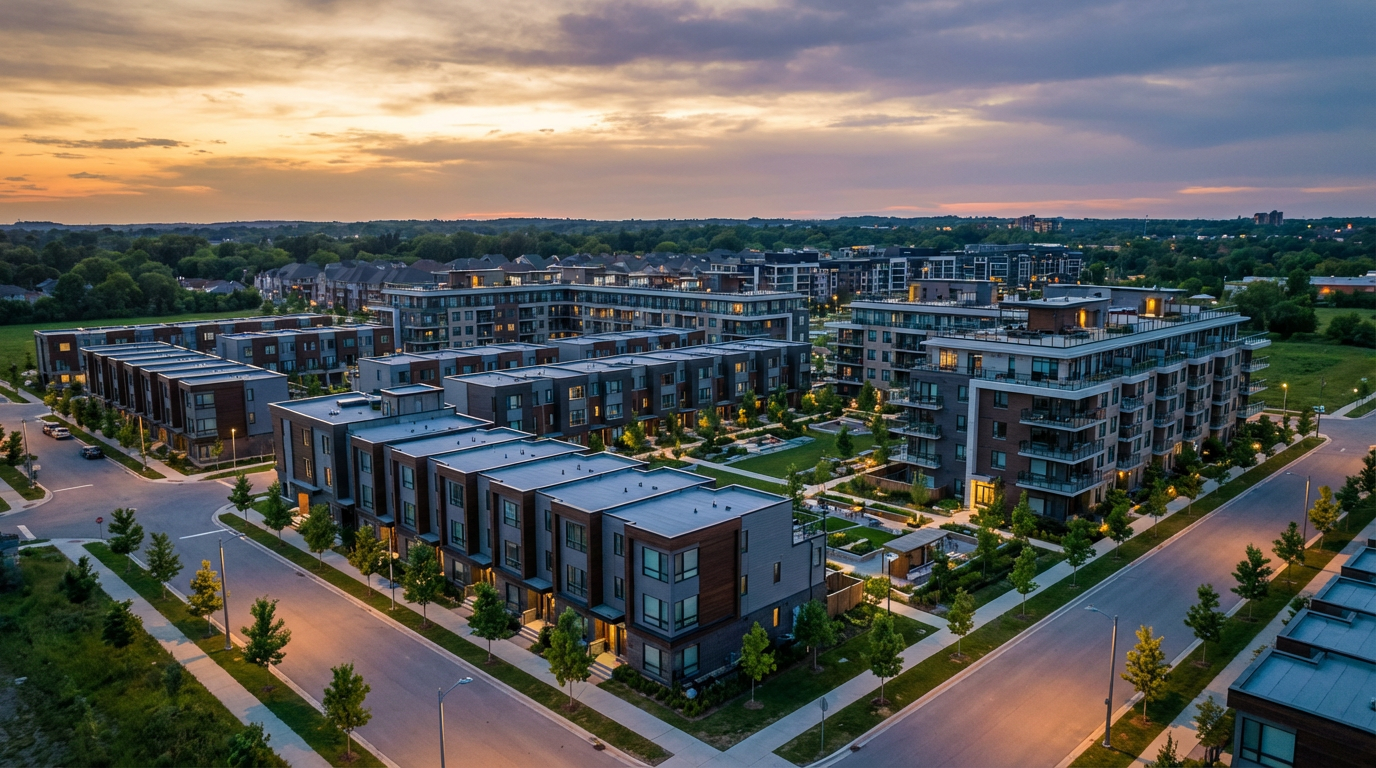
To choose a profitable market, investors should prioritize locations with steady population growth, diverse job opportunities, and high rental demand. Analyzing key financial metrics such as cash flow and capitalization rates alongside local appreciation trends is essential when learning how to choose a real estate market for long term buy and hold investing. Selecting neighborhoods with low vacancy rates and favorable economic indicators ensures sustainable wealth growth over several decades.
Selecting the right location for a cross-border real estate acquisition often feels like navigating a minefield of conflicting data and localized risks. Many international investors find themselves paralyzed by the scale of the American market, fearing that a miscalculation in geography could compromise their long term wealth preservation. This choice is the most critical decision in your investment lifecycle, as even the best asset cannot overcome the drag of a failing local economy. In this guide, we will move beyond surface level trends to analyze the foundational pillars of market demand and the specific financial metrics required for rigorous underwriting. You will learn how to identify resilient submarkets, navigate local legislation, and understand why regions like the American Midwest continue to offer the structural stability essential for a sophisticated buy and hold strategy.
The Foundations of Buy and Hold Investing for International Groups
For the international investor, buy and hold real estate represents a strategic shift from volatile equity markets toward tangible, income-producing assets. Unlike speculative flipping, this strategy prioritizes sustainable cash flow and long-term inflation protection. Understanding how to choose a real estate market for long term buy and hold investing requires a departure from the trophy asset mentality often associated with primary markets like New York or San Francisco.
Primary markets offer global prestige, yet their high entry prices often result in rental yields as low as 2 or 3 percent, which barely covers operating costs. In contrast, secondary and tertiary markets in the Midwest, specifically Milwaukee, provide the yield necessary for consistent debt servicing and portfolio scaling. While coastal cities rely heavily on speculative appreciation, the Midwest focus remains on Net Operating Income (NOI). As experienced real estate investment consultants, we emphasize that sustainable wealth is built on the spread between financing costs and rental income. When you invest in Milwaukee, you are prioritizing cash-on-cash returns over the uncertainty of market timing. High-yield residential properties in these regions act as a hedge; they ensure the asset remains self-sustaining through various economic cycles while building equity via consistent debt paydown.
Macro Market Metrics: The Three Pillars of Demand
Analyzing macro metrics is the first step in identifying sustainable yield. When determining how to choose a real estate market for long term buy and hold investing, three pillars dictate the longevity of your cash flow: population growth, job creation, and economic diversity.
Population growth must be viewed in tandem with employment. A healthy market exhibits a strong ratio of new residents to new jobs; if population increases without corresponding job growth, rental demand becomes artificial and unsustainable. Conversely, job growth is the fundamental engine of the rental market. As real estate investment consultants, we monitor these figures against national averages. While the national rental vacancy rate sat near 7.1 percent in early 2025, markets with consistent job growth in the 1.5 to 2 percent range often maintain much tighter occupancy, ensuring lower turnover costs for the owner.
Economic diversity protects an investor against localized recessions. You should avoid municipalities reliant on a single industry, such as oil or a specific tech niche, which creates a single point of failure for your portfolio. A stable market like Milwaukee benefits from a balanced mix of healthcare, education, and financial services. This diversity is why many international groups invest in Milwaukee; the city provides a buffer that volatile, one-industry towns lack. When mid-sized cities with populations between 100,000 and 500,000 show these stable pillars, they frequently offer rental yields 2 to 3 percent higher than major coastal metros, providing the reliable debt coverage required for long term success.
Submarket Selection: Moving from City to Neighborhood

Identifying a strong metro is only half the battle when determining how to choose a real estate market for long term buy and hold investing. Even in cities with robust growth, specific submarkets may be experiencing localized decline or stagnation. To protect your capital, you must zoom in on the neighborhood level. Key indicators of submarket health include school district ratings, access to reliable transit, and the renter rate, which is the percentage of the population that rents rather than owns. A healthy renter rate indicates a proven demand for your product, while high-quality schools attract stable, long-term families who significantly reduce turnover costs.
However, data APIs and multivariate models only tell part of the story. In older Midwest cities, neighborhood quality can shift dramatically from one block to the next. This granularity is where local expertise becomes vital; data points alone cannot capture the nuance of a single street's revitalization or neglect. As real estate investment consultants, we understand that boots on the ground insights are required to identify these micro-variations. While a zip code might look attractive on a spreadsheet, one street might be adjacent to a new commercial development while the next is plagued by deferred maintenance. Leveraging full acquisition management services ensures that your investment is based on physical reality, not just digital averages. This micro-level scrutiny is the final filter for ensuring long-term yield.
Key Financial Metrics for Rental Property Underwriting

Once submarket viability is confirmed, the focus shifts to rigorous underwriting. Precision in financial modeling is what separates a speculative bet from a predictable income stream. When determining how to choose a real estate market for long term buy and hold investing, three primary metrics serve as the bedrock for evaluation.
Capitalization Rate (Cap Rate): This is calculated by dividing Net Operating Income (NOI) by the asset's purchase price. NOI includes all rental income minus operating expenses like property taxes, insurance, and maintenance; however, it excludes debt service. In stable Midwest markets, target cap rates typically range from 6% to 8%, offering a significant premium over coastal yields.
Cash on Cash Return: This is the annual pre-tax cash flow divided by the total cash invested, including the down payment and closing costs. For international investors utilizing leverage, this metric reflects the actual performance of their liquid capital. We typically target 8% to 12% for our clients.
Gross Rent Multiplier (GRM): This is the property price divided by the gross annual rent. A lower GRM indicates a faster path to paying off the asset through rental income.
Investors often utilize the 1 percent and 2 percent rules as quick screening tools for potential acquisitions.
Metric | Monthly Rent Target | Risk and Yield Profile |
|---|---|---|
1% Rule | 1% of purchase price | Balanced yield, modern infrastructure, lower maintenance costs. |
2% Rule | 2% of purchase price | High cash flow, older housing stock, increased repair and vacancy risks. |
The 1 percent rule remains the benchmark for sustainable, high quality residential assets. While the 2 percent rule is frequently achievable in specific Midwest pockets, it often signals properties with deferred maintenance or higher tenant turnover. Investors must balance these yields against the long term cost of capital. Utilizing full acquisition management services helps verify that these projected numbers reflect actual market performance rather than optimistic pro-formas.
Understanding the 7 Percent Rule and Other Investor Benchmarks
Standardized benchmarks provide a vital reality check against the emotional lure of volatile appreciation. The 7 percent rule is frequently cited by institutional investors as a minimum hurdle rate. In stable rental markets, this typically refers to a target capitalization rate or a total annual return that justifies the risk of the asset. A 7% yield ensures that even after management fees and maintenance, the property generates a consistent spread over long term inflation.
Another essential benchmark is the 3-3-3 rule, which breaks down total return into three predictable components: - 3% Annual Appreciation: Conservative growth that tracks or slightly exceeds inflation. - 3% Cash Flow: Liquid net income after all expenses and debt service. - 3% Debt Paydown: The steady reduction of loan principal, which builds equity automatically.
Chasing 20% speculative gains often requires taking on excessive leverage or entering volatile, low-yield markets. In contrast, these conservative benchmarks are central to understanding how to choose a real estate market for long term buy and hold investing that focuses on durability. Working with real estate investment consultants helps international groups identify markets where these fundamental metrics are consistently met, providing a defensive posture that preserves capital across economic cycles.
The Role of Property Taxes and Local Legislation

Precise underwriting requires more than calculating gross yields; it requires an audit of the local regulatory and fiscal landscape. When determining how to choose a real estate market for long term buy and hold investing, property tax structures are often the most overlooked variable. In Wisconsin, for example, municipalities frequently conduct reassessments that align the tax-assessed value with the recent purchase price. If an international investor underwrites a deal based on a seller’s outdated tax bill, the subsequent adjustment can erase thousands in projected net income. Our real estate investment consultants mitigate this by projecting post-acquisition assessments during the due diligence phase, ensuring the cash flow remains viable after the city updates its records.
Beyond taxes, the legal framework of a state dictates the operational risk of a portfolio. Landlord-friendly jurisdictions like Wisconsin offer streamlined processes for handling lease violations compared to tenant-friendly coastal metros. In cities with aggressive rent control or protracted eviction timelines, a single non-paying tenant can lead to twelve months of lost revenue and high legal fees. In contrast, the Midwest legal environment generally supports the enforcement of lease contracts, which reduces long-term vacancy costs and preserves the predictability of cash flow. Engaging full acquisition management services allows investors to navigate these local nuances, ensuring that the legal and tax environment supports the decision to invest in Milwaukee for the long term.
Why International Investors Choose the Midwest for Long Term Stability

Coastal markets like New York or San Francisco entice investors with the promise of steep appreciation. However, the capital required to enter these markets creates a significant barrier, and the resulting yields, often hovering between 2 and 3 percent, rarely cover international financing costs or operational overhead. For those determining how to choose a real estate market for long term buy and hold investing, the Midwest offers a more pragmatic alternative. Lower acquisition costs allow for immediate cash-on-cash returns that are unattainable in Tier 1 coastal cities.
Stability is the primary differentiator for the region. While coastal prices are prone to dramatic corrections during economic shifts, cities like Milwaukee demonstrate significantly lower volatility. This buffer effect occurs because Midwest property values are grounded in local rental demand and median incomes rather than speculative global capital. When international groups invest in Milwaukee, they benefit from a market where the spread between financing costs and rental income remains reliably wide. By partnering with real estate investment consultants and utilizing full acquisition management services, these investors build portfolios that remain resilient even when primary markets experience contraction. The Midwest prioritizes the longevity of the income stream over the uncertainty of the exit price.
Selecting the right international market involves balancing economic indicators, legal structures, and rental demand to ensure long-term appreciation. While the process demands thorough due diligence, finding the perfect entry point often requires local insights and strategic planning. If you want expert help navigating these global opportunities, we invite you to learn more about our mission at KLR INVESTMENTS. Our goal is to provide the clarity and support needed to build a resilient real estate portfolio with confidence.