
Foreign investors can finance U.S. real estate by utilizing specialized foreign national loan programs or Debt Service Coverage Ratio (DSCR) loans that focus on the asset's cash flow. To obtain a foreign investor mortgage US rental property, applicants typically need a significant down payment and proof of international assets; however, many lenders do not require a U.S. credit history or residency.
Entering the United States real estate market as a foreign national often feels like navigating an opaque maze of restrictive lending requirements and bureaucratic hurdles. Traditional domestic banks typically demand a deep U.S. credit history or domestic tax returns, which effectively sidelines international investors who possess the capital but lack a local financial footprint. Understanding how to leverage specialized financing is essential for those looking to secure high yield assets in strategic markets like Milwaukee; secure leverage is the primary engine for scaling global wealth. This guide provides a practical roadmap for securing a foreign investor mortgage for U.S. rental property by focusing on the Debt Service Coverage Ratio (DSCR) loan model. You will learn how to bypass traditional credit barriers, navigate the complexities of FIRPTA and ITIN requirements, and implement specific financing rules to optimize your portfolio. We move beyond theory to provide the specific tools needed to build a sustainable, leveraged U.S. property portfolio.
Can Foreign Nationals Secure a Mortgage for U.S. Real Estate?
It is a common misconception that securing a foreign investor mortgage US rental property requires a Green Card or a Social Security Number. In reality, U.S. law allows non-citizens to own and finance real estate without residency status. While large retail banks often impose rigid requirements that exclude international borrowers, a specialized segment of the lending market caters specifically to global investors.
Many Israeli investors are surprised to learn they can qualify for financing based on the property’s income potential rather than their personal credit history or tax returns from their home country. This is primarily achieved through the Debt Service Coverage Ratio (DSCR) model, which prioritizes the cash flow of the asset over the borrower's international financial footprint. This shift in underwriting allows for a much more streamlined acquisition process than traditional mortgage products.
At KLR INVESTMENTS LLC, we serve as the critical link between international buyers and these institutional opportunities. Our investment consulting and acquisition management services streamline the process, ensuring that the lending requirements align with the unique financial profiles of our clients. With eight years of expertise in the Midwest market, we have developed a network of lenders who understand the stability of Milwaukee’s residential sector. Navigating the transition from overseas capital to a cash flowing U.S. asset is entirely achievable when you leverage the right financial structures and local partnerships.
The DSCR Loan: Why It Is the Preferred Foreign Investor Mortgage for U.S. Rental Property

The Debt Service Coverage Ratio (DSCR) loan has become the industry standard for an international buyer seeking a foreign investor mortgage US rental property because it simplifies the underwriting process significantly. While traditional Full Doc loans require extensive verification of personal income through W2s, pay stubs, and tax returns, DSCR lenders focus almost exclusively on the property's performance. For an Israeli investor, this eliminates the logistical nightmare of translating Hebrew financial documents or reconciling different international tax years with U.S. standards, which often leads to delays or denials in conventional banking.
Underwriting a DSCR loan relies on a straightforward mathematical formula to determine the viability of the investment:
Component | Description |
|---|---|
Gross Monthly Rent | The estimated or actual rental income of the property. |
Monthly PITI | The total sum of Principal, Interest, Taxes, and Insurance. |
DSCR Calculation | Gross Monthly Rent divided by Monthly PITI. |
Lenders typically look for a sweet spot ratio of 1.2 or higher. A 1.2 ratio indicates that the property generates 20 percent more income than the monthly debt obligations, providing a necessary safety net for repairs, maintenance, and vacancies. If a property in Milwaukee generates $2,400 in rent and the PITI is $2,000, the ratio is exactly 1.2. While some specialized lenders may accept a 1.0 ratio, meaning the property breaks even, the most competitive interest rates and terms are reserved for assets with a stronger coverage margin.
This model is particularly advantageous for clients utilizing our investment consulting and acquisition management services. Because we focus on the stable Milwaukee market, where rental yields are historically strong relative to property values, hitting these DSCR requirements is much more feasible than in high cost coastal cities. By shifting the focus from the borrower’s personal wealth to the property’s revenue, DSCR loans provide a streamlined path to closing that respects the complexity of international financial footprints.
Financing U.S. Rental Property Without a U.S. Credit History
Securing a foreign investor mortgage US rental property without a FICO score is a primary concern for many international buyers. In the absence of traditional U.S. credit history, lenders use specific financial levers to mitigate risk. Instead of relying on a three digit score, they focus on the borrower's equity and their liquid position. This typically manifests as a requirement for a 30 to 40 percent down payment. While this equity requirement is higher than what a domestic borrower might face, it significantly reduces the lender's exposure and often facilitates a faster approval process.
Lenders also look for liquid reserves to ensure the loan can be serviced during potential vacancies or unexpected repairs. Most programs require 6 to 12 months of mortgage payments (PITI) to be held in a verified account. To further establish credibility, many specialized lenders accept a letter of good standing from an international financial institution or a secondary credit report from the investor's home country. For our clients in Israel, a documented history of responsible account management with a local bank can serve as a powerful substitute for a U.S. credit file.
The strategic advantage of the Milwaukee market becomes clear when calculating these requirements. A 30 percent down payment on a high yield residential property in Wisconsin is far more accessible than the same percentage required for a property in a high cost coastal city. At KLR INVESTMENTS LLC, our eight years of expertise in the Midwest market allows us to identify properties where these capital requirements remain manageable for the average investor. By combining investment consulting and acquisition management with realistic financial expectations, we help investors bypass the credit barrier and secure reliable, cash flowing assets.
Essential Requirements and Documentation for International Borrowers

Transitioning from the theoretical approval to the actual closing table requires a meticulous approach to documentation. Lenders specializing in a foreign investor mortgage US rental property have standardized their requirements to accommodate international borrowers, yet the speed of the transaction often depends on how quickly these items are gathered. At KLR INVESTMENTS LLC, we utilize our eight years of expertise in the Midwest market to guide investors through this administrative phase, ensuring every document meets U.S. underwriting standards.
To prepare for a successful application, investors should organize the following essential items:
Identification and Travel Documents: A valid international passport is mandatory. While many specialized lending programs do not require a specific U.S. visa for investment purposes, providing one if it exists can sometimes streamline the process.
Individual Taxpayer Identification Number (ITIN): This is a tax processing number issued by the IRS. It is necessary for tax reporting and often required by lenders. We help coordinate the ITIN application process as part of our financial oversight.
Proof of Seasoned Funds: Lenders require bank statements, typically covering the last two months, to verify that the down payment and reserve capital have been 'seasoned' or sitting in the account for at least 60 days. This satisfies anti-money laundering regulations.
U.S. Bank Account: Investors must establish a U.S. based bank account to facilitate mortgage payments and receive rental income. This account serves as the hub for all property related financial activity.
U.S. Entity Formation: We strongly recommend holding the property title within a U.S. Limited Liability Company (LLC). This provides a layer of asset protection and can offer tax advantages.
By leveraging our investment consulting and acquisition management, clients can navigate these requirements without the typical stress of cross-border bureaucracy. We act as your local boots on the ground, coordinating with lenders and legal professionals to ensure your documentation is audit ready and compliant with Wisconsin state requirements.
Navigating the 3 7 3 and 7 Percent Rules in Real Estate Financing
Investors exploring a foreign investor mortgage US rental property often encounter specific shorthand rules used by American underwriters and analysts to gauge risk and performance. One such guideline is the 3-7-3 rule, which establishes the mandatory waiting periods after significant financial hardships. Under standard U.S. guidelines, a borrower must wait three years after a short sale or bankruptcy, and seven years following a foreclosure, before they are eligible for most traditional financing. While the DSCR programs we facilitate are notably more flexible for international clients, these benchmarks serve as the foundational risk parameters for the U.S. lending environment.
Equally important is the 7 percent rule, frequently referred to in high yield circles as the 0.7% to 1% rule. This guideline suggests that for a property to be a viable income generator, the monthly gross rent should equal at least 0.7% to 1% of the total purchase price.
Market Location | Median Price | 0.7% Rent Target | Local Reality |
|---|---|---|---|
Los Angeles, CA | $920,000 | $6,440 | ~$3,800 (Low Yield) |
Milwaukee, WI | $175,000 | $1,225 | ~$1,600 (High Yield) |
In Milwaukee, meeting and exceeding these yield benchmarks is a standard objective rather than a rarity. By leveraging our eight years of expertise in the Midwest market, we identify assets that satisfy these rigorous cash flow requirements. Our investment consulting and acquisition management focuses on the stable Milwaukee residential sector, where the relationship between acquisition cost and rental income remains far more favorable than in coastal markets.
Strategic Tax Considerations: FIRPTA and ITIN for Foreign Nationals
While securing a foreign investor mortgage US rental property is the primary hurdle for acquisition, long term success depends on navigating the Internal Revenue Service (IRS) framework. Tax compliance is not merely an administrative checkbox; it is a critical component of capital preservation.
A central regulation for non resident owners is the Foreign Investment in Real Property Tax Act (FIRPTA). This law requires the buyer to withhold a percentage, typically 15 percent, of the gross sales price when a foreign person disposes of U.S. real estate. This withholding serves as a deposit toward any capital gains taxes owed. Without proper planning, this can significantly impact the liquidity of an exit strategy.
Operating through a U.S. Limited Liability Company (LLC) is a standard practice we facilitate for our clients. An LLC provides essential liability protection and allows for more efficient tax treatment of rental income and expenses. When paired with an Individual Taxpayer Identification Number (ITIN), this structure enables investors to file U.S. tax returns and potentially claim refunds on over-withheld funds.
Given the complexity of cross border regulations, including the specific treaties between the U.S. and Israel, we integrate tax focused financial coordination into our investment consulting and acquisition management. Leveraging our eight years of expertise in the Midwest market, we connect investors with specialized CPAs who ensure that every dollar of cash flow remains compliant and optimized for the long term.
Why Financing Milwaukee Property Offers Better Yields for International Investors
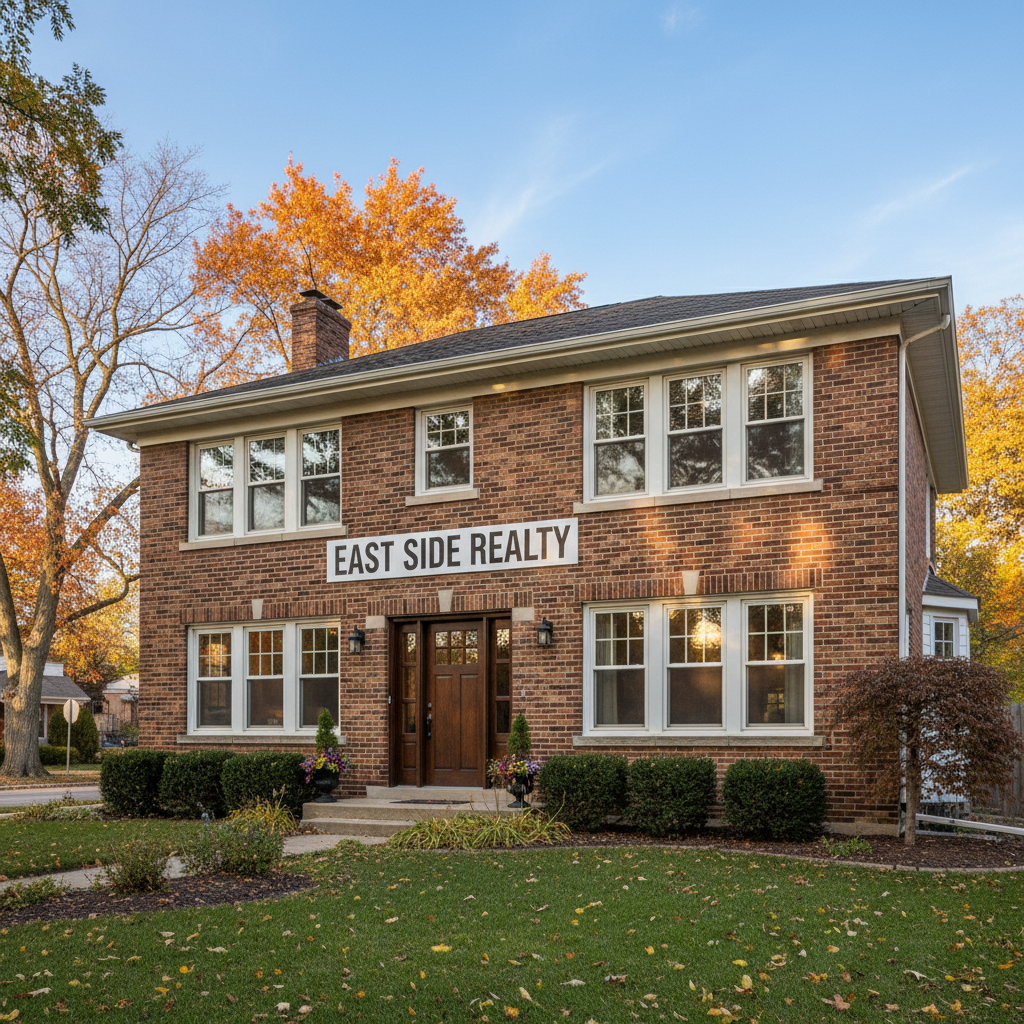
Strategic tax planning and entity formation create the foundation for a secure investment, but the choice of geography determines the actual velocity of your capital. A foreign investor mortgage US rental property in coastal markets like California or New York often requires a massive capital outlay for a single asset that may barely achieve a break-even DSCR. In these high-priced corridors, a 30 percent down payment on a median-priced home can exceed $250,000, often resulting in negligible monthly profits after debt service.
In contrast, the stable Midwest rental market allows international investors to achieve far greater scale with the same amount of equity. By focusing on Milwaukee, an investor can often secure three or four high-yield units for the price of one coastal condo. This diversification significantly reduces the risk of vacancy impact on the overall portfolio. Milwaukee’s favorable rent-to-price ratios ensure that even with the higher interest rates typical of non-resident financing, properties continue to deliver reliable cash-flow returns.
Our investment consulting and acquisition management focuses on identifying these high-performance assets where the math favors the borrower. With eight years of expertise in the Midwest market, we understand that the true value for an Israeli investor lies in the predictable monthly yield found in Wisconsin’s residential neighborhoods. By utilizing the leverage of a DSCR loan in a market with low entry costs, you can build a robust, cash-flowing portfolio that outperforms speculative coastal investments.
Navigating the complexities of U.S. real estate financing requires a clear understanding of loan structures and cross-border regulations. While foreign investors face unique challenges, the potential for long-term growth makes these efforts worthwhile. If you would like professional guidance to streamline your investment journey, we are here to support your goals. You can learn more about our approach and values by visiting our About page. Building a successful portfolio is easier when you have an experienced team by your side.