
To help a foreign investor buy rental property USA, local real estate professionals provide remote viewings and manage all necessary digital documentation. The process requires obtaining an Individual Taxpayer Identification Number (ITIN) for tax compliance; furthermore, specialized lenders offer mortgage options tailored for international buyers. This approach allows investors to build a U.S. real estate portfolio from abroad without needing to be physically present.
You have capital ready to invest, you understand the opportunity in US real estate, and yet the process of buying property thousands of miles away, without a US credit history or a local network, feels like a wall you cannot get past. That uncertainty stops too many foreign investors from building the cash-flowing portfolios they are fully capable of owning. The good news is that purchasing rental property in the United States as a foreign national is not only legal, it is more straightforward than most people expect when you have the right structure and the right team in place. In this guide, KLR Investments breaks down exactly how to buy US rental property remotely, from legal ownership structures and financing options to taxes, market selection, and finding a local partner you can actually trust.
Can a Foreign Investor Really Buy US Rental Property Without Visiting?
The short answer is yes, and the legal framework fully supports it. Foreign nationals face no citizenship or residency restrictions when purchasing US real estate. A foreigner can buy a house in the USA, rent it to tenants, collect income, and build equity without ever obtaining a visa or establishing US residency. International buyers collectively purchased over $53 billion worth of US properties in a recent year alone, which reflects how routine this has become.
Even the closing process does not require physical presence. Remote closings are handled through power of attorney arrangements or internationally notarized documents, allowing an investor in Tel Aviv to finalize a Milwaukee property acquisition from their own office.
The practical challenge has never been legal eligibility. It has been having the right people on the ground. Milwaukee, specifically, is a market where this strategy works exceptionally well, combining accessible entry prices with strong rental demand. KLR INVESTMENTS LLC was built to solve exactly this problem, offering Israeli investors full acquisition management and portfolio oversight services backed by eight years of Milwaukee-specific expertise.
Why Milwaukee Beats the Typical Foreign Investor Markets
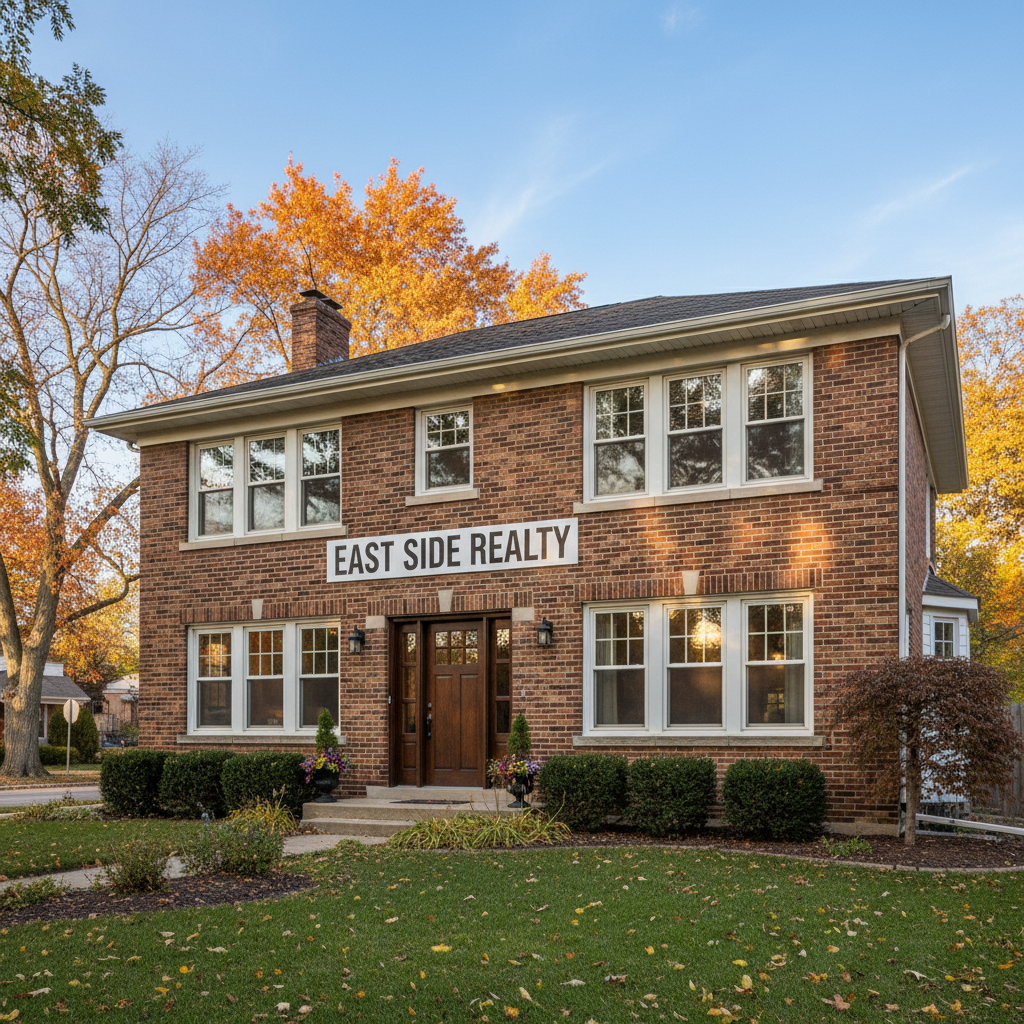
Most guides aimed at foreign investors default to the same four markets: Florida, Texas, New York, and California. Those markets are well-known for a reason, but familiarity has driven up entry prices and compressed yields to the point where cash flow is difficult to achieve without significant leverage. Milwaukee operates on a fundamentally different math.
Entry prices for investment-grade rental properties in Milwaukee routinely fall between $80,000 and $200,000, compared to median multifamily prices that exceed $500,000 in most coastal metros. That lower acquisition cost, paired with Milwaukee's stable rental demand, produces gross rental yields that regularly reach 8 to 12 percent in neighborhoods like Sherman Park, Walker's Point, and Bay View. These are not distressed areas; they are established rental corridors with consistent occupancy driven by working tenants tied to healthcare, manufacturing, and university employment.
The underlying economy matters for a foreign investor buy rental property USA strategy because speculative markets create exit risk. Milwaukee's economy is anchored by employers like Froedtert Health, Rockwell Automation, and the University of Wisconsin-Milwaukee system, which sustain housing demand independent of tourism cycles or tech-sector volatility. Vacancy rates in the city's core rental neighborhoods have remained structurally low as a result.
Market validation has followed. Out-of-state and international LLCs have been acquiring Milwaukee rental properties at an accelerating pace since 2018, a pattern that reflects institutional recognition of the market's fundamentals rather than speculative momentum.
Milwaukee also contains federally designated Opportunity Zones, which can provide capital gains deferral and potential tax elimination for investors who hold qualifying investments long enough. This adds a meaningful incentive layer that coastal markets cannot replicate at comparable entry prices.
The Legal Basics: What Foreign Buyers Must Know Before Purchasing

Understanding Milwaukee's investment fundamentals is one thing; understanding the legal framework that governs your ownership is another. Both matter equally before committing capital.
Ownership itself is straightforward. No visa, residency status, or citizenship is required to hold US real estate. A foreign national has the same property rights as an American citizen from the moment title transfers.
The more consequential legal points emerge at the tax level. FIRPTA, the Foreign Investment in Real Property Tax Act, is the one most buyers underestimate. When a foreign person sells US real estate, the buyer is legally required to withhold 15 percent of the gross sale price and remit it to the IRS. Note that this is calculated on the full sales price, not the gain, which creates a significant cash flow obligation at closing unless a withholding certificate or qualifying exception applies. Planning for FIRPTA from day one, not at the point of sale, is essential.
Foreign investors also need an ITIN, an Individual Taxpayer Identification Number, to file US tax returns. This replaces the Social Security Number for non-residents and must be obtained before filing begins.
For Israeli investors specifically, the US-Israel tax treaty creates meaningful planning opportunities that most general guides never mention. The treaty may reduce certain withholding obligations and affect how income is characterized, which can alter your effective tax rate on rental proceeds.
One additional exposure point that frequently surprises foreign buyers: US estate tax applies to foreign nationals holding US situs assets above $60,000 at death, compared to the multi-million dollar threshold available to US citizens. Proper ownership structuring addresses this risk directly.
These are not obstacles; they are planning inputs. A qualified US tax attorney or CPA with international experience should review your situation before purchase. KLR INVESTMENTS LLC coordinates exactly this type of professional guidance through its tax-focused financial coordination service.
Ownership Structure: Why Most Foreign Investors Use a US LLC
Proper ownership structure is where the legal and tax planning from the previous section becomes actionable. For most foreign investors pursuing a foreign investor buy rental property USA strategy, a US LLC is the standard choice, and the reasons are practical rather than theoretical.
Liability protection is the first consideration. Holding a Milwaukee rental property inside an LLC separates the asset from your personal balance sheet. A tenant lawsuit or property-related claim reaches the LLC's assets, not your personal savings or other holdings abroad.
The operational advantages matter just as much for remote investors. An LLC can open a US bank account, execute leases directly, and receive rent deposits, creating a clean administrative structure that functions independently across time zones. This is not possible with the same simplicity under direct personal ownership.
On the tax side, a single-member LLC is treated as a disregarded entity by default, meaning income and expenses flow through to your individual US tax return without a separate corporate-level tax. That pass-through treatment, combined with thoughtful FIRPTA planning, can reduce withholding exposure at the point of sale when the structure is set up correctly from the start.
Direct personal ownership and foreign trust structures are alternatives, but both carry complications, particularly around estate tax exposure and FIRPTA compliance, that make them less efficient for most situations.
Wyoming and Delaware are frequently used for LLC formation due to favorable statutes and privacy provisions. Either entity, however, must be registered as a foreign LLC in Wisconsin before conducting business here. KLR INVESTMENTS LLC coordinates this setup as part of the full acquisition management and portfolio oversight services it provides. A qualified US attorney should handle the legal formation itself.
How to Finance a US Rental Property as a Foreign National

With the ownership structure question settled, financing is where many foreign investors hit their first real friction point. The good news is that foreigners can absolutely buy property in the USA with a mortgage; US residency and a Social Security Number are not prerequisites.
The most practical options break down into three paths:
Foreign national loans are offered by non-QM (non-qualified mortgage) lenders who specifically underwrite non-residents. These lenders substitute home-country income documentation, bank statements, and asset verification for the US credit history they cannot access. Expect a down payment of 25 to 40 percent, six to twelve months of cash reserves held in a verifiable account, and a documented income or asset profile from Israel. Rates will sit above conventional levels, but the product exists and is widely used.
DSCR loans have become particularly relevant for Milwaukee acquisitions. Qualification is based on the property's projected rental income relative to its debt obligations, not the borrower's personal income. Given Milwaukee's strong rent-to-price ratios, many properties clear the DSCR threshold comfortably, making this a cleaner path for investors whose income documentation is complex or structured through foreign entities.
All-cash purchase is the route many Israeli investors take first. It eliminates underwriting delays, strengthens offers in competitive situations, and sidesteps currency documentation requirements entirely. Once US banking relationships and a transaction history are established, a cash-out refinance becomes a straightforward next step.
Some Israeli banks with US correspondent relationships also offer financing for cross-border purchases, worth exploring if an existing banking relationship is already in place.
KLR INVESTMENTS LLC works with investors to assess which path aligns with their capital position, timeline, and long-term portfolio goals before a single property search begins.
The Remote Buying Process: Step by Step for International Investors

With financing strategy confirmed, the process moves to execution. This is where most guides lose specificity, offering generic advice about "finding a local agent" without explaining what a coordinated remote acquisition actually looks like. The workflow KLR INVESTMENTS LLC runs for Israeli investors has eight distinct phases, each designed to function entirely without the investor leaving home.
Investment criteria definition. The engagement starts with a structured consultation covering budget, target yield, preferred property type (single-family, duplex, small multifamily), and hold horizon. This conversation sets the parameters for everything that follows.
Market analysis and property sourcing. The local Milwaukee team identifies candidate properties against those criteria, filtering for rent-to-price ratios, neighborhood fundamentals, and condition. Investors receive a written analysis, not just a listing link.
Virtual property tours. A KLR INVESTMENTS LLC consultant walks through each shortlisted property live via video call. This is not a pre-recorded walkthrough. Questions get answered in real time, and the investor sees what the camera is pointed at, including the basement, the mechanicals, and the alley.
Independent inspection report. A licensed Milwaukee inspector produces a full written report with photographs, delivered digitally. The investor reviews findings before any offer is binding.
Offer submission and negotiation. The local agent handles all negotiations on the investor's behalf, with clear communication across the Israel-to-US time zone gap.
Title search and due diligence. A Wisconsin title company confirms clean ownership history, outstanding liens, and easements. All documentation is reviewed locally and summarized for the investor.
Remote closing. Closing is executed through a power of attorney arrangement or internationally notarized documents. Digital signing tools and wire transfer protocols handle the financial settlement. No flight required.
Post-close setup. Property management is activated, tenant placement begins, and rent collection systems are configured before the investor's first statement arrives.
The full acquisition management and portfolio oversight services KLR INVESTMENTS LLC provides cover every stage above under a single coordinated engagement.
Tax Responsibilities for Foreign Owners of US Rental Property

Once the acquisition process is complete and rent begins flowing, the tax obligations start. Foreign ownership of US rental property creates annual filing requirements that do not disappear simply because the investor lives abroad.
The first decision every foreign landlord faces is how rental income gets taxed at the federal level. The default treatment subjects gross rental receipts to a flat 30 percent withholding tax, applied before any expenses are deducted. The alternative is to file an election to treat the rental activity as effectively connected income (ECI) with a US trade or business. Under ECI treatment, the investor pays tax on net income after deducting mortgage interest, property taxes, insurance, management fees, repairs, and depreciation. For nearly every investor with real operating expenses, the ECI election produces a substantially lower tax bill. Competitors rarely explain this comparison clearly, but it is one of the most consequential decisions a foreign owner makes in year one.
Depreciation is available to foreign owners on the same terms as US residents. Residential rental property is depreciated over 27.5 years, which generates a meaningful annual deduction against net rental income even in years when the property appreciates in value.
Wisconsin also taxes rental income earned within the state. A non-resident Wisconsin return is required annually alongside the federal filing.
An ITIN is required to file both returns. Without one, neither the ECI election nor depreciation deductions can be claimed.
At the point of sale, FIRPTA withholding applies as covered earlier. For Israeli investors specifically, the US-Israel tax treaty may reduce applicable withholding rates and affect how certain income categories are characterized, which is worth a direct conversation with a qualified professional before structuring any transaction.
KLR INVESTMENTS LLC coordinates tax-focused financial coordination with US CPAs who have international experience, connecting investors with the right professionals before the first rent check arrives rather than after the first filing deadline passes.
What to Look for in a Local Partner When Buying Remotely

Getting the tax structure right, as covered above, depends entirely on having professionals who catch issues before they become expensive. That same principle applies to every stage of a remote acquisition: the quality of your outcome is largely determined by the quality of the people executing on your behalf in Milwaukee.
The concern is legitimate. Placing a six-figure capital commitment with someone you have never met, in a city you have never visited, requires a different standard of due diligence than a local purchase. Here is what that standard should look like:
Specific, current neighborhood knowledge. General familiarity with Milwaukee is not enough. Your partner should speak fluently about rent dynamics in Sherman Park versus Bay View versus Walker's Point, not just the metro average.
Documented experience with foreign and Israeli investors. Familiarity with ITIN requirements, FIRPTA planning, cross-timezone communication, and international wire logistics separates specialists from generalists.
End-to-end coordination capacity. Sourcing a property is one task. Coordinating the inspection, title work, LLC registration, closing, property management activation, and first rent collection is another. A single point of coordination prevents gaps.
Transparent reporting across time zones. Regular written updates, digital document access, and responsive communication during Israeli business hours are operational requirements, not extras.
An established professional network. The right partner brings vetted attorneys, CPAs with international experience, licensed inspectors, and property managers, not referrals assembled deal by deal.
KLR INVESTMENTS LLC was built specifically around this checklist. Eight years of Milwaukee-focused work, combined with direct specialization in connecting Israeli investors with high-yield Midwest properties, means every item above reflects how the firm actually operates. Learn more about how KLR INVESTMENTS LLC works with international investors, or review the full acquisition management and portfolio oversight services that cover every stage of the remote buying process.
Navigating the U.S. real estate market from abroad is entirely achievable with the right systems and local partners in place. By leveraging digital tools and building a reliable team, you can successfully grow your portfolio without needing to be physically present. If you want expert help managing these complexities or building a custom investment strategy, we are ready to assist. You can learn more About our dedicated team and our specialized approach to helping foreign investors reach their financial goals.